
Choosing the correct PET preform neck size directly affects bottle sealing, filling line efficiency, cap compatibility, and overall packaging cost. Beverage manufacturers often face leakage, production delays, or cap mismatch because the neck finish was selected without technical evaluation. This guide explains the most common PET preform neck types, where they are used, and how to select the right option based on production needs.
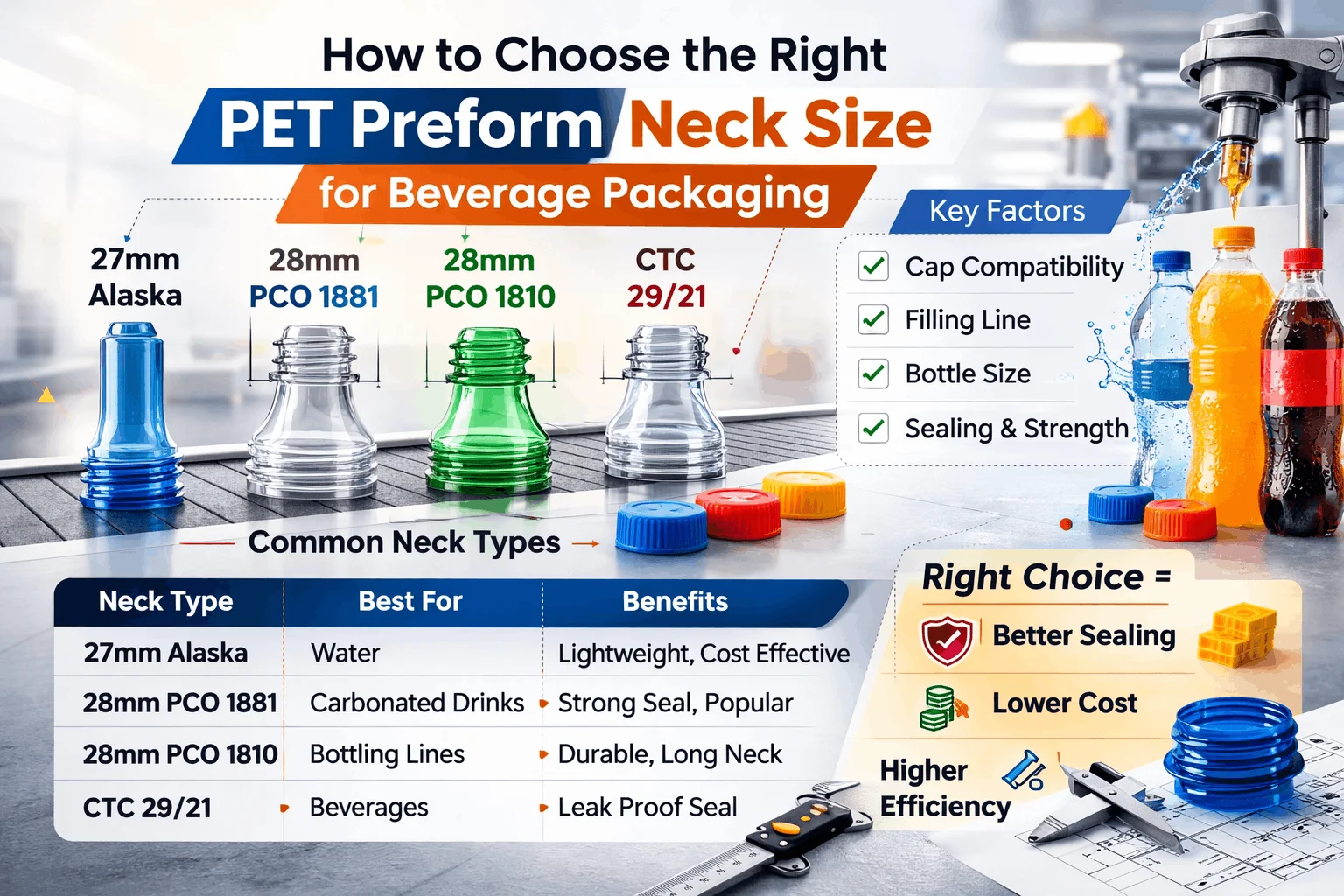
The right PET preform neck size depends on four main factors:
Most beverage brands use 28mm PCO 1881, 28mm PCO 1810, 27mm Alaska, or CTC 29/21 neck finishes depending on production goals and packaging requirements.
Many buyers focus on bottle design but ignore neck finish selection. The neck size controls how the bottle performs from production to retail.
A matching neck and cap standard prevents leakage, maintains carbonation, and protects product quality during storage.
Each bottling line is designed for specific neck dimensions. Choosing the wrong type can slow production or require machine adjustments.
Proper sealing reduces air entry and contamination, helping beverages maintain freshness for longer periods.
Standard neck sizes ensure easier cap sourcing and stable supply, reducing operational risk.
Below are the most widely used neck finishes in beverage packaging and their typical applications.
This neck finish is widely preferred for modern beverage packaging due to efficiency and cost control.
Buyers should confirm machine compatibility before choosing this option.
This neck type is popular for large-scale water packaging operations.
CTC neck finishes are often selected where leakage prevention is a priority.
Choosing the right neck size requires checking practical production details.
Different bottle sizes need different neck and weight combinations for stability.
Lightweight preforms reduce cost, but structural strength must remain suitable for transport and storage.
Preforms must stretch correctly during blowing to avoid bottle defects.
Packaging must withstand handling, stacking, and shipping pressure.
Many packaging issues happen because of avoidable planning errors.
Low-cost options may cause compatibility problems later.
Even small neck differences can lead to sealing failures.
Heavier preforms increase material cost without always improving performance.
Understanding these mistakes helps reduce production risk and long-term costs.
Frystal Pet supplies PET preforms designed around real manufacturing requirements instead of one-size-fits-all solutions.
This flexibility helps beverage manufacturers align packaging with production efficiency and cost targets.
Before placing an order, keep these details ready:
Providing accurate information helps suppliers recommend the right preform faster.
28mm PCO 1881 is commonly used because it supports strong sealing and lightweight packaging.
27mm Alaska neck preforms are widely used for packaged drinking water due to cost efficiency.
Yes. Incorrect neck and cap combinations are a major cause of leakage and sealing failures.
Yes. Optimized weight reduces raw material use and transportation cost while maintaining bottle strength.
Choosing the correct neck size improves production efficiency and reduces packaging issues. If you are planning new beverage packaging or optimizing existing bottles, Frystal Pet can help you select the right PET preform based on your technical and production requirements.

© 2025 Frystal Pet Pvt. Ltd. All Rights Reserved