Selecting the correct PET preform weight and neck size is one of the most important decisions in bottle manufacturing. A small mistake in preform selection can lead to higher material costs, bottle deformation, cap compatibility issues, transportation damage, or product leakage. Whether you manufacture bottled water, carbonated drinks, edible oils, pharmaceuticals, or personal care products, understanding how PET bottle preforms work can help improve efficiency and reduce long-term costs.
This guide explains the key factors buyers should evaluate before sourcing preforms and highlights common mistakes that can affect bottle performance and profitability.
Many businesses focus on bottle design while overlooking the technical specifications of the preform itself. However, the preform determines the bottle's strength, weight distribution, durability, and production efficiency.
Choosing the wrong PET preform weight may result in bottles that are either unnecessarily expensive or too weak for transportation and storage requirements. Similarly, selecting an incorrect neck finish can create compatibility issues with caps, closures, and filling systems.
Proper preform selection helps manufacturers balance product protection, production efficiency, and material costs.
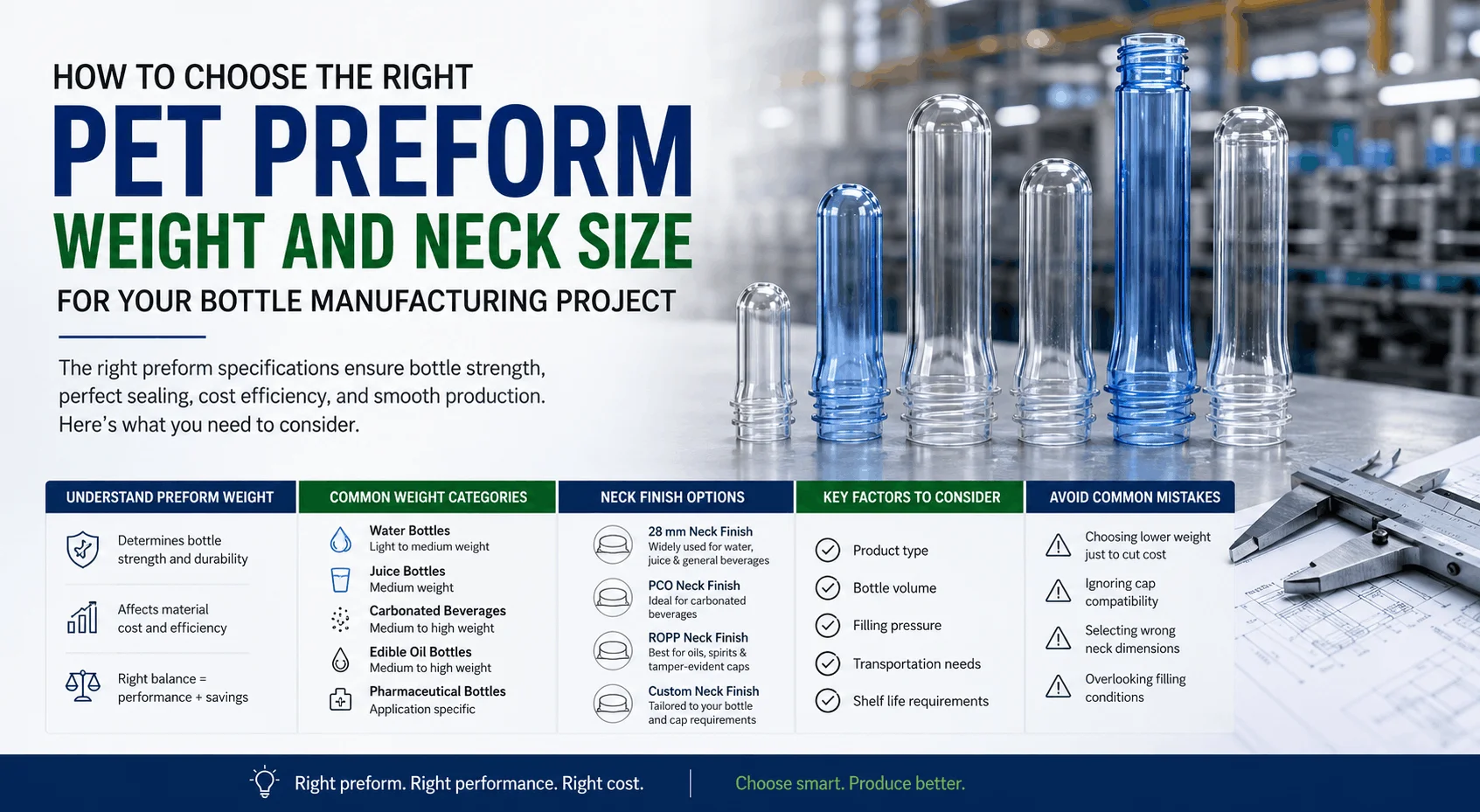
PET preform weight refers to the amount of PET resin used to manufacture a preform. It is usually measured in grams and directly influences the final bottle's strength and material consumption.
Different products require different preform weights based on bottle capacity, filling conditions, and transportation requirements.
A higher PET preform weight generally produces a stronger bottle with better resistance to deformation and compression.
For products that experience rough handling during transportation or stacking, stronger bottles help minimize damage and maintain product integrity.
Material costs represent a significant portion of packaging expenses. Increasing preform weight improves strength but also increases resin consumption.
Manufacturers should focus on achieving the optimal balance between bottle performance and material efficiency rather than simply selecting the heaviest or lightest option available.
The ideal PET preform weight varies depending on the product being packaged.
Bottled water typically uses lightweight PET bottle preforms because the product does not generate internal pressure.
These applications prioritize cost efficiency while maintaining sufficient bottle strength.
Juice packaging often requires slightly heavier preforms to provide additional structural stability during transportation and storage.
Carbonated drinks generate internal pressure that places stress on bottle walls. These applications generally require heavier PET preforms capable of maintaining shape and performance.
Edible oil containers frequently use customized preform weights based on bottle size and handling requirements.
Pharmaceutical packaging often prioritizes consistency, dimensional accuracy, and product protection. Preform specifications must align with regulatory and product-specific requirements.
Experienced manufacturers such as Frystal Pet Pvt Ltd often work closely with customers to identify suitable weight configurations based on product type and packaging goals.
The neck finish plays a critical role in bottle functionality because it determines cap compatibility, sealing performance, and filling line integration.
The 28 MM neck finish is commonly used for bottled water, juices, and various beverage applications. It supports multiple closure options and is widely accepted across industries.
PCO neck finishes are frequently used in carbonated beverage packaging. These finishes are specifically designed to handle pressure-sensitive products while maintaining seal integrity.
ROPP neck finishes are often selected for edible oils, specialty beverages, and selected pharmaceutical applications where tamper-evident closures are required.
Many businesses require custom PET preforms with unique neck dimensions to support specialized caps, dispensing systems, or branding requirements.
The characteristics of the packaged product significantly influence preform selection. Carbonated drinks, water, oils, and pharmaceuticals all have different packaging requirements.
Larger bottles typically require higher PET preform weight specifications to maintain structural integrity.
Products filled under pressure require stronger bottle structures and appropriate neck finishes to ensure performance throughout the supply chain.
Long-distance transportation, stacking conditions, and export logistics should be considered when selecting preform specifications.
Products with extended shelf-life requirements may need bottles that provide enhanced durability and packaging stability over time.
One of the most common mistakes is choosing the lightest possible preform to reduce material expenses.
While this may lower upfront costs, it can increase the risk of bottle deformation, leakage, and transportation damage.
Not all neck finishes are compatible with every closure system. Incompatible components can lead to sealing problems and product wastage.
Incorrect neck specifications may create challenges during filling, capping, and distribution.
Many buyers fail to account for product pressure, filling temperatures, and handling requirements when selecting PET bottle preforms.
These factors should be evaluated before finalizing specifications.
Custom PET preforms allow manufacturers to create unique bottle designs that help products stand out in competitive markets.
Customized preforms can be engineered to reduce excess material while maintaining required performance standards.
A properly designed custom preform can improve strength, appearance, handling, and transportation efficiency.
For many manufacturers, custom PET preforms provide a practical solution for balancing cost control and packaging performance.
Before placing an order, consider asking:
Asking these questions can help avoid costly packaging issues later in the production process.
Selecting the right PET preform weight and neck size requires more than choosing a standard specification. Product type, bottle volume, filling conditions, transportation requirements, and closure compatibility all play a role in determining the most effective packaging solution.
Businesses that invest time in evaluating these factors often achieve better bottle performance, lower packaging costs, and fewer operational challenges. Working with an experienced PET preform manufacturer can simplify the selection process and help ensure the final packaging performs as intended throughout the supply chain.
Need help selecting the ideal PET preform for your bottle design? Connect with Frystal Pet Pvt Ltd's technical team for expert recommendations and bulk manufacturing support.

© 2026 Frystal Pet Pvt. Ltd. All Rights Reserved. Promoted by Webads India