
Choosing the right neck finish is one of the most important decisions when selecting PET preforms. Many buyers often compare PCO 1810 vs 1881 but struggle to understand the actual difference and its impact on cost, performance, and compatibility.
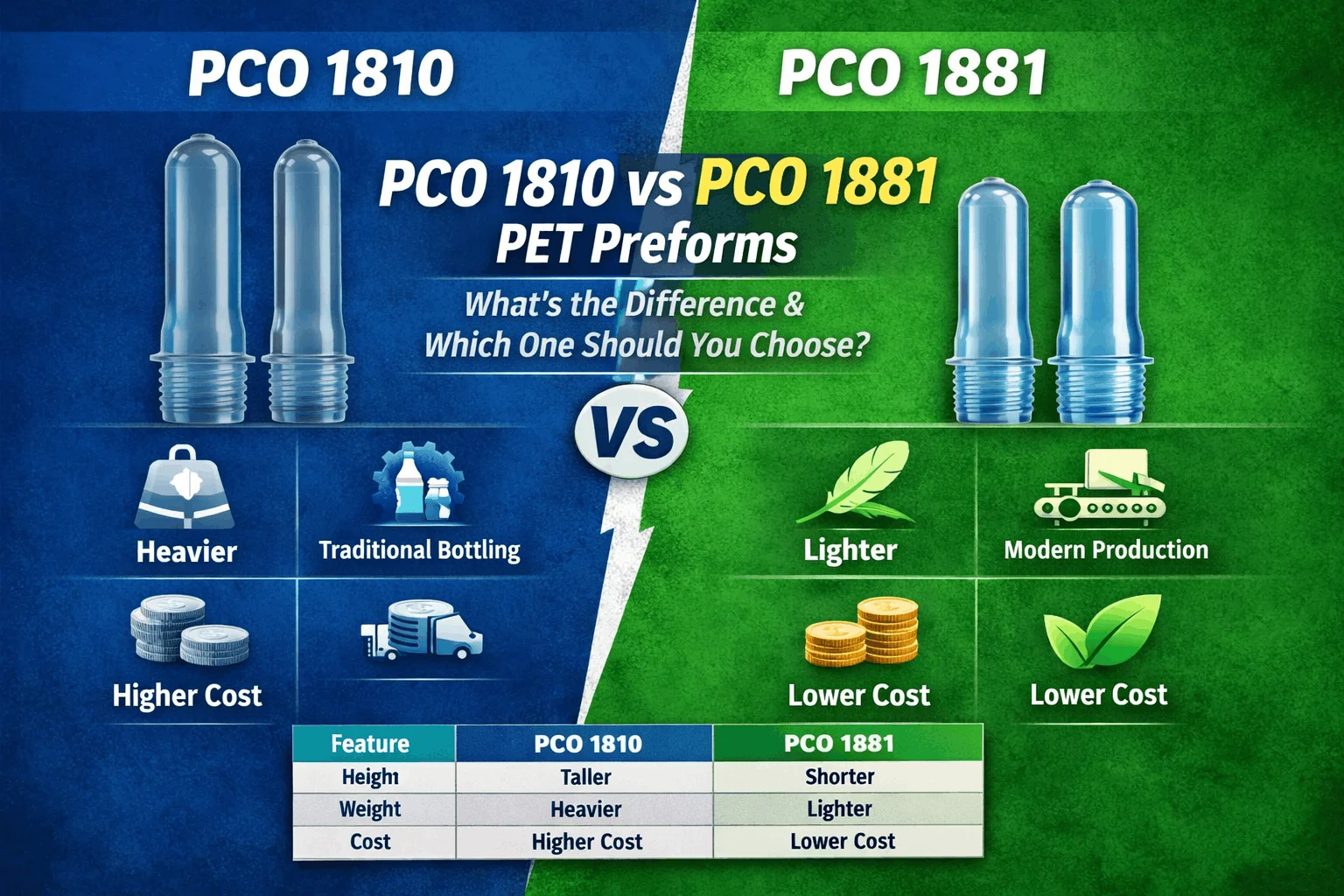
This guide explains the difference between PCO neck types in a clear and practical way so you can make the right choice based on your production needs.
PCO stands for Plastic Closure Only and refers to the standard neck finish used in PET bottles, especially for beverages like water and carbonated drinks.
Understanding PET preform neck comparison helps avoid issues like leakage, improper sealing, or higher packaging costs.
PCO 1810 is the older and widely used neck standard in the beverage industry.
Many manufacturers continue using 1810 because their existing machinery is designed for it. Companies like Frystal Pet Pvt Ltd still supply this type for businesses that require compatibility with older systems.
PCO 1881 is a newer and more optimized version developed to reduce material usage while maintaining performance.
Due to cost efficiency and reduced weight, many companies are shifting toward 1881 in recent years.
| Factor | PCO 1810 | PCO 1881 |
|---|---|---|
| Neck Height | Taller | Shorter |
| Weight | Heavier | Lighter |
| Material Usage | Higher | Reduced |
| Cost Efficiency | Lower | Better |
| Compatibility | Older systems | Modern systems |
| Application | Traditional bottling | High-speed & optimized production |
This PET preform neck comparison clearly shows that both options serve different business needs.
The choice between PCO 1810 vs 1881 depends on your production setup and cost priorities.
Many businesses consult experienced manufacturers like Frystal Pet Pvt Ltd to evaluate their requirements before switching, as even small specification changes can affect large-scale production.
The packaging industry is gradually moving toward lighter and more efficient solutions. This is one of the main reasons why PCO 1881 is gaining popularity.
Despite this shift, PCO 1810 still holds relevance in markets where existing infrastructure cannot be easily modified.
Understanding the difference between PCO neck types is essential before selecting a PET preform. While PCO 1810 offers compatibility and reliability, PCO 1881 provides efficiency and cost savings.
Making the right choice depends on your operational setup, production scale, and long-term goals rather than just following industry trends.
👉 Consult with our team today to select the right neck type based on your production requirements.
PCO 1881 has a shorter neck and uses less plastic compared to PCO 1810, making it more cost-efficient.
No, both have different dimensions and require specific caps.
PCO 1881 is generally more cost-effective due to reduced material usage.
Yes, it is widely used in modern beverage packaging, including carbonated drinks.
To reduce cost, improve efficiency, and support lightweight packaging trends.

© 2026 Frystal Pet Pvt. Ltd. All Rights Reserved. Promoted by Webads India