Packaging plays a much bigger role in business profitability than many manufacturers initially realize. The choice between PET preforms and glass bottles affects production costs, transportation expenses, product safety, storage requirements, and overall supply chain efficiency. Whether you operate in the bottled water, beverage, edible oil, pharmaceutical, or personal care sector, selecting the right packaging material can directly influence operational performance and customer satisfaction.
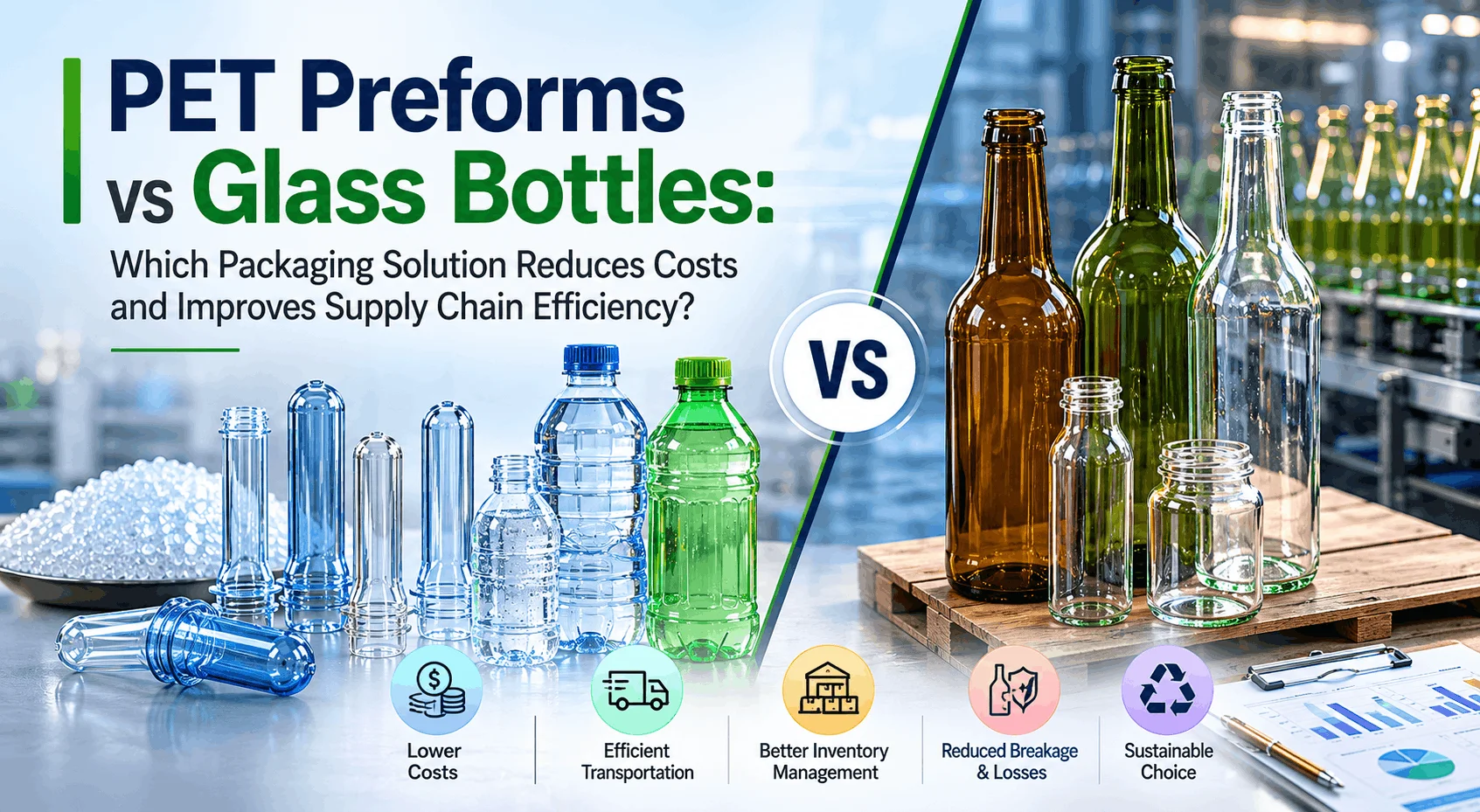
This guide compares PET preforms and glass bottles from a practical business perspective, helping manufacturers make informed packaging decisions based on cost, logistics, sustainability, and product requirements.
Packaging is not just a container for a product. It influences manufacturing costs, warehouse utilization, transportation efficiency, breakage rates, and customer experience. Businesses that choose the wrong packaging material often face higher logistics expenses, increased product damage, and reduced operational flexibility.
As markets become more competitive, manufacturers are increasingly evaluating packaging materials that balance performance, affordability, and sustainability. This is why PET packaging solutions have become a preferred option across multiple industries.
PET preforms are injection-molded plastic components made from Polyethylene Terephthalate (PET). These preforms serve as the base material for manufacturing PET bottles through a stretch blow molding process.
PET bottle manufacturers produce preforms in different weights, neck sizes, and specifications to meet the requirements of various industries.
During production, PET preforms are heated and expanded using specialized blow molding equipment. This process transforms the preform into a fully formed bottle while maintaining strength, clarity, and durability.
PET preforms are widely used for:
Glass bottles are commonly used in premium beverages, specialty food products, perfumes, and selected pharmaceutical applications.
One of the biggest factors influencing packaging decisions is overall cost.
Glass manufacturing generally requires higher energy consumption during production due to high-temperature melting processes. PET preforms typically require less energy during manufacturing, helping reduce production expenses.
For businesses producing large volumes, this difference can significantly impact annual packaging budgets.
Glass bottles are considerably heavier than PET bottles. Increased weight means higher freight charges, increased fuel consumption, and reduced transportation efficiency.
PET packaging solutions allow businesses to transport larger quantities per shipment while keeping logistics costs under control.
Storage efficiency is another major consideration. PET preforms occupy less space before blow molding, allowing manufacturers to optimize warehouse capacity.
This advantage becomes particularly valuable for businesses managing high inventory volumes or seasonal demand fluctuations.
Glass is vulnerable to cracking and breakage during transportation and handling. Damaged products can result in product loss, replacement expenses, customer complaints, and supply chain disruptions.
PET bottles offer greater impact resistance, reducing the likelihood of damage throughout the distribution process.
The lightweight nature of PET packaging significantly improves transportation efficiency. Businesses can reduce shipping costs while maximizing load capacity.
This benefit becomes increasingly important when products are distributed across multiple regions or export markets.
PET preforms can be stored and transported before bottle formation, allowing greater flexibility in production planning.
Manufacturers can respond more effectively to changing market demand without maintaining excessive finished bottle inventory.
Because PET bottles weigh less and experience fewer breakage incidents, companies often see measurable reductions in logistics-related costs.
Lower transportation and handling expenses contribute directly to improved operational margins.
Modern PET bottle manufacturing systems support high-speed production, enabling businesses to meet large-scale packaging requirements efficiently.
Many beverage packaging solutions rely on PET because of its compatibility with automated, high-volume production environments.
Sustainability has become an important factor in packaging decisions for both manufacturers and consumers.
PET is widely recyclable and can be reprocessed into new products when proper recycling systems are in place. Many industries actively incorporate recycled PET materials into their packaging strategies.
Glass is also recyclable and can be reused multiple times. However, transportation and processing requirements can influence its overall environmental footprint.
PET packaging solutions require less material weight compared to glass packaging for many applications. This helps reduce resource consumption throughout the supply chain.
Because PET packaging is lighter, transportation vehicles consume less fuel when carrying equivalent product volumes. This can contribute to lower transportation-related carbon emissions.
Companies seeking practical sustainability improvements often evaluate packaging materials based on both recyclability and supply chain efficiency.
PET preforms dominate the bottled water industry due to their lightweight structure, durability, and cost efficiency.
PET bottles offer the strength needed to withstand internal pressure generated by carbonated beverages while maintaining product integrity.
Many juice manufacturers prefer PET packaging because it provides convenience, durability, and transportation efficiency.
PET bottles are widely used for edible oils due to their resistance to breakage and ease of handling.
Shampoos, lotions, body washes, and cosmetic products frequently utilize PET packaging because of its design flexibility and consumer convenience.
Companies looking for reliable PET packaging solutions often work with experienced manufacturers such as Frystal Pet Pvt Ltd to obtain industry-specific preform specifications.
Despite the growing popularity of PET, glass remains suitable for specific applications.
Glass packaging may be preferable when:
For luxury beverages, specialty food products, and selected pharmaceutical products, glass can still provide important advantages.
Choosing a supplier involves more than comparing prices.
Look for manufacturers capable of maintaining consistent preform dimensions, weight accuracy, and material quality across production batches.
Different industries require different neck finishes and bottle designs. A supplier should offer customization options that align with specific packaging requirements.
Evaluate whether the manufacturer can support current demand as well as future business growth.
Industries such as food, beverage, and pharmaceuticals require packaging materials that meet relevant quality and safety standards.
Reliable PET bottle manufacturers should be able to demonstrate compliance with applicable industry regulations and quality control processes.
Both PET preforms and glass bottles have their place in modern packaging. However, when the goal is reducing transportation costs, minimizing breakage, improving warehouse efficiency, and streamlining operations, PET packaging solutions often provide significant advantages.
The right choice depends on product type, distribution requirements, sustainability goals, and overall business objectives. By carefully evaluating cost, logistics, performance, and customer expectations, manufacturers can select a packaging solution that supports long-term growth and operational efficiency.
Looking for custom PET preforms for your packaging requirements? Contact Frystal Pet Pvt Ltd for technical guidance and bulk manufacturing support tailored to your industry needs.

© 2026 Frystal Pet Pvt. Ltd. All Rights Reserved. Promoted by Webads India