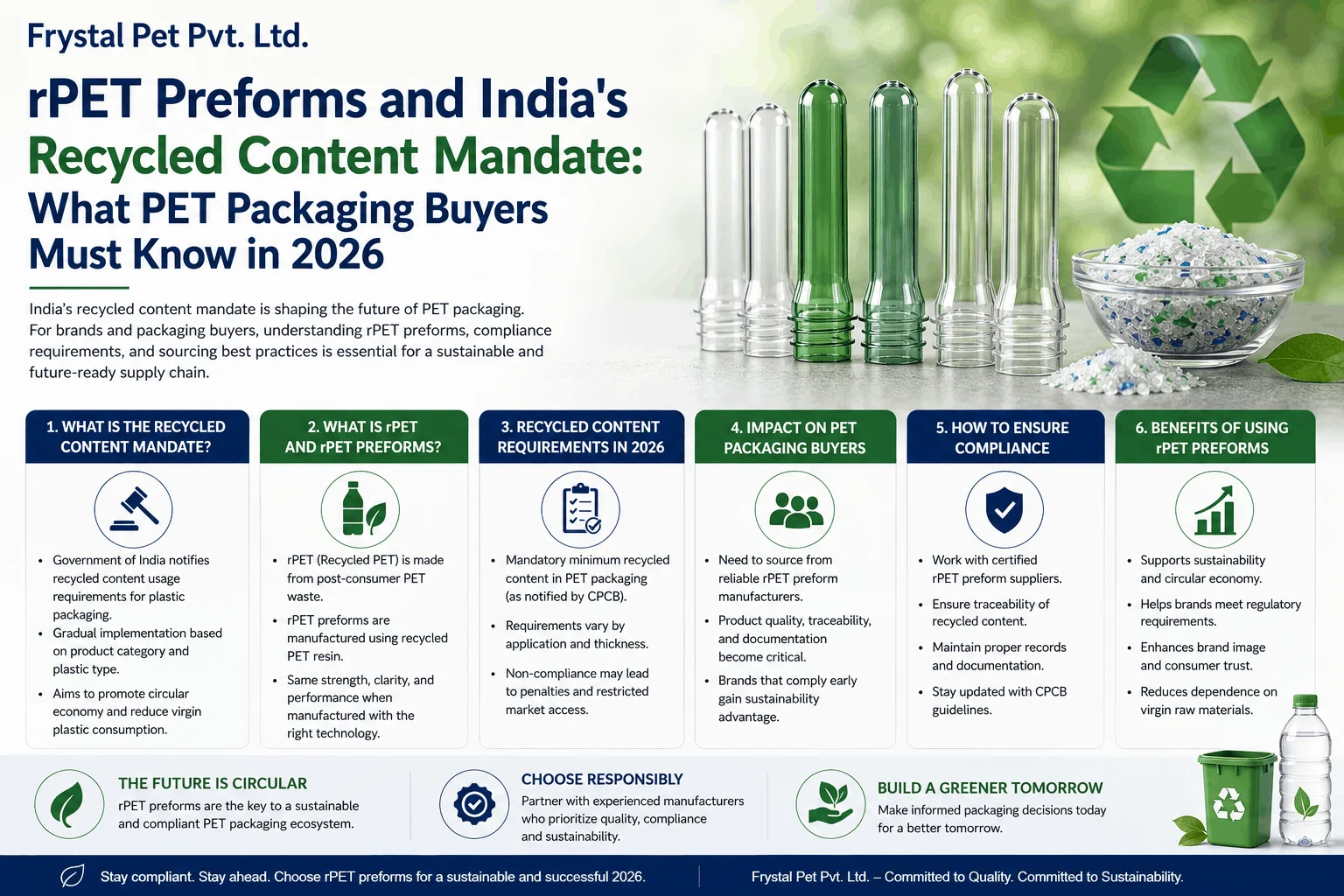
India's Plastic Waste Management Amendment Rules, notified on 31 March 2026, make recycled content mandatory in plastic packaging. Rigid plastic packaging, known as Category I, which includes PET bottles and jars, must contain a minimum of 30% recycled content in 2025 to 2026, rising in phases toward 60% by 2028 to 2029. For most bottle brands, the practical route to meeting this requirement is the rPET preform, a preform made using recycled PET blended with virgin resin. This guide explains what the mandate requires, how rPET preforms are made, and what buyers should check before switching.
Please note that regulations continue to evolve and enforcement details are updated over time. The figures below reflect the framework as notified in 2026. Always confirm the current targets and compliance steps with the latest CPCB notifications or a qualified compliance advisor before making sourcing decisions.
The rules place responsibility on Producers, Importers, and Brand Owners, together called PIBOs. If your brand fills and sells bottled water, beverages, edible oil, or any product in PET packaging, you are a brand owner under these rules. The 2026 amendment also extended accountability across the value chain, bringing raw material suppliers such as resin and pellet sellers into the reporting framework.
For rigid plastic packaging in Category I, the recycled content requirement increases year by year.
Because the percentages step up over time, sourcing decisions made today should account for higher recycled blends in the near future.
The framework is no longer paper-only. Plastic packaging must carry traceable identifiers such as QR codes or barcodes, recycled content percentages must be disclosed on labelling, and independent environmental auditors verify company claims. State Pollution Control Boards are conducting more frequent inspections, and non-compliance carries financial penalties. This is why brands are moving quickly to secure a reliable recycled content supply chain, building on the wider shift toward sustainable packaging goals.
An rPET preform is a standard PET preform manufactured using recycled PET resin, usually blended with virgin PET. The recycled material comes from a bottle-to-bottle recycling chain.
The finished preform then goes through the same blow molding process to become a bottle, which is why switching to rPET does not require a new production line for most manufacturers. If you are new to resin types, our PET preform material guide covers the basics.
Buyers considering rPET want honest answers, not marketing claims. Here is what genuinely changes and what does not.
The key variable is the quality and consistency of the recycled resin. This is where supplier selection matters most.
The mandate is expressed as a recycled content percentage of your packaging. To meet a 30% recycled content requirement, your preforms must contain that share of recycled material, documented through supplier certification and test reports. Brands typically work with their preform manufacturer to fix a blend that meets the current target while planning for the higher percentages coming in future years. Keeping documentation of every batch is essential, because the recycled content claim must be verifiable under audit.
For water and food contact, the rPET source must meet the applicable food grade standard. Ask for certification of the recycled resin, not just a verbal assurance.
Inconsistent recycled blends cause variation in clarity and processing. Ask how the supplier controls blend consistency across production runs.
Compliance requires documentation. Confirm the supplier can provide reports that support your recycled content claim under audit.
Always evaluate real preform samples at your intended recycled percentage before committing to bulk supply, so there are no surprises on shelf appearance.
Food grade rPET supply can be tighter than virgin resin. Confirm the supplier can maintain steady supply as your volumes and required percentages grow.
Meeting the recycled content mandate is easier with a preform partner who understands both manufacturing and documentation. Frystal Pet Pvt Ltd operates FSSC certified manufacturing across its Neemrana and Pithampur units, works with buyers on blend sampling, and supports the paperwork needed to back recycled content claims.
The focus is on helping brands transition to compliant packaging without disrupting their blowing and filling lines, matching the recycled blend to each buyer's product and clarity requirements.
The recycled content mandate has shifted rPET from an optional sustainability choice to a compliance requirement for PET packaging brands in India. The practical steps are clear: understand your current target, choose a food grade rPET source, validate clarity and processing with samples, and keep verifiable documentation. Because the required percentages rise over time, acting early protects your supply chain and your brand. To discuss rPET blend samples and compliance documentation, connect with Frystal Pet Pvt Ltd.
Yes. Under the Plastic Waste Management Amendment Rules notified in 2026, rigid plastic packaging including PET bottles must contain a minimum percentage of recycled content, and this requirement increases in phases over the following years.
For rigid plastic packaging in Category I, the requirement starts at 30% recycled content for 2025 to 2026 and rises in phases toward 60% by 2028 to 2029. Always verify the current figure against the latest CPCB notification.
Yes, when the recycled resin is food grade and meets the applicable standard for food contact. Using certified food grade rPET is essential for water and food packaging applications.
Often yes. Food grade recycled resin can cost more than virgin resin, so buyers should budget for the mandate as a compliance cost rather than expect a saving.
Compliance is proven through supplier certification, batch test reports, recycled content disclosure on labelling, and traceable identifiers, all of which may be verified by environmental auditors and pollution control boards.

© 2026 Frystal Pet Pvt. Ltd. All Rights Reserved. Promoted by Webads India