
Edible oil and ghee are packed in PET because it is clear, lightweight, and shatterproof, but oil packaging has specific demands that water packaging does not. The preform must deliver high clarity so the product looks clean on shelf, panel strength to hold the shape of the typical square or paneled oil bottle, a neck finish that seals tightly against slow oil leakage, and full food grade compliance. This guide explains how to choose the right preform for edible oil and ghee bottles and jars.
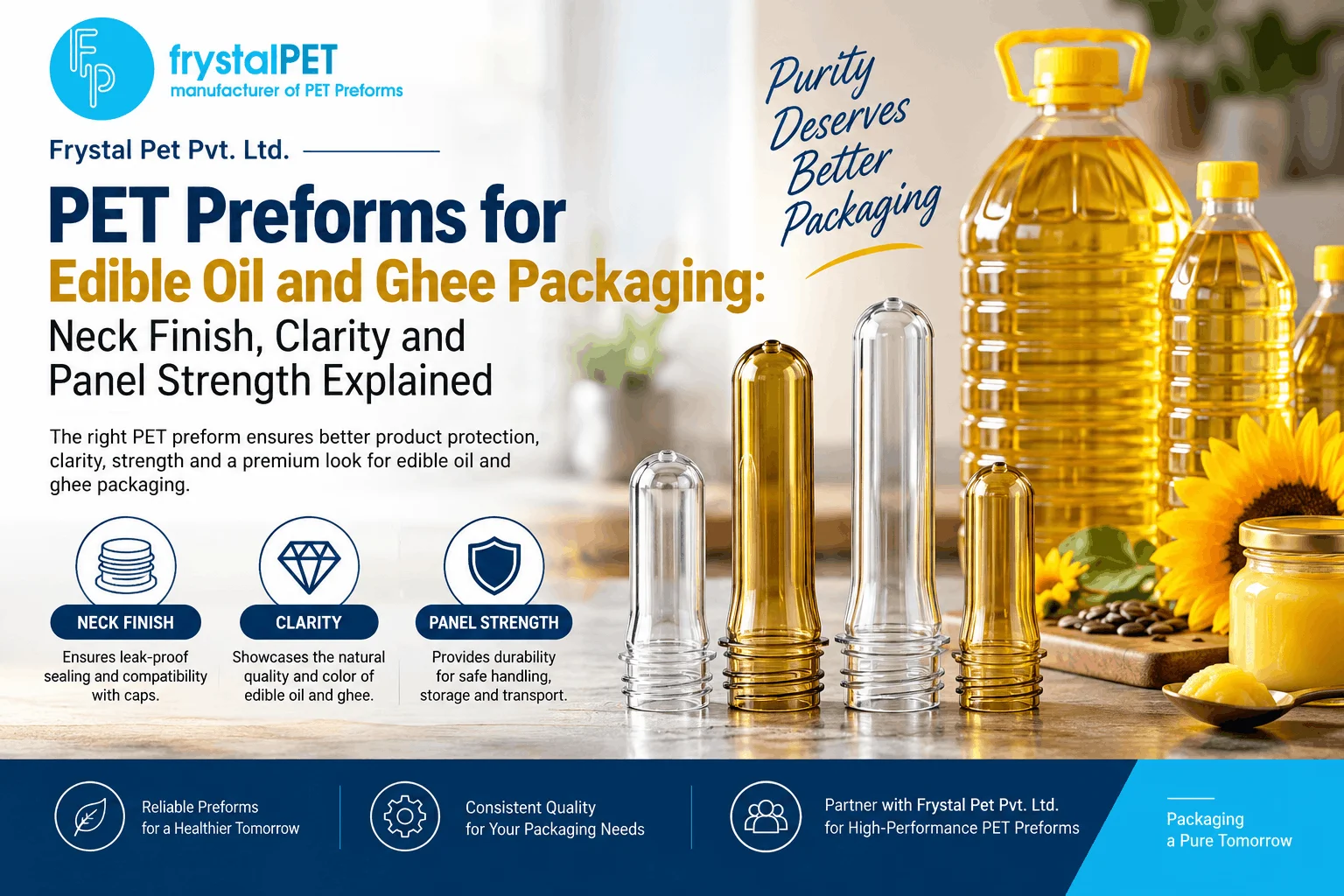
Edible oil is one of the largest PET packaging segments in India, and the preform choice affects shelf appeal, breakage, leakage, and cost across huge volumes. Here is what oil and ghee packaging demands from a preform.
Edible oil brands have moved steadily from tins and pouches to PET bottles, and the reasons are practical.
The result is that most cooking oil in the Indian retail market now moves in PET, from small 500ml packs to 1 litre, 2 litre, and 5 litre bottles.
With water, clarity is expected but forgiving. With oil, any haze in the bottle makes the product look low quality. This puts a premium on resin and preform clarity, so oil brands should always evaluate real clarity samples before committing.
Oil bottles are often square or paneled, and they carry a heavier, denser fill than water. Without correct wall distribution, the panels dent, collapse, or deform during stacking and transport. Preform weight and material distribution decide whether the finished bottle holds its shape.
Oil finds its way through any weak seal far more easily than water. The neck finish must be accurate and consistent, and the cap must match precisely, or bottles seep during storage and transport.
Edible oil bottles typically use a threaded bottle neck sized to the pack and cap system, chosen for a reliable reseal and a leak free seal against oil. The exact neck depends on your bottle design and closure supplier, so confirm compatibility before finalizing.
Ghee is a special case. Because ghee is semi solid and consumers scoop it, it is often packed in wide mouth jars rather than narrow neck bottles. For this, a wide mouth jar preform such as the 48mm 3 start format is the natural fit. See our guide on the 48mm PET jar preform for how wide mouth packaging works for ghee and similar products.
Larger oil packs of 1 litre, 2 litre, and 5 litre carry significant weight, and the bottle must resist top load when cases are stacked. This makes preform weight selection more demanding than for small water bottles. Too light and the bottle panels collapse or the base fails, too heavy and you waste resin on every unit across huge volumes.
The right weight is matched to the bottle size, fill weight, and stacking needs. Our PET preform weight guide explains how to balance strength against cost.
Oil and ghee are direct food contact products, so the preform must be made from food grade PET resin in a facility that follows certified food safety systems. This is not optional. Brands should confirm food grade resin, FSSAI aligned practices, and certified manufacturing with their supplier.
Frystal Pet Pvt Ltd operates FSSC certified manufacturing, which matters for edible oil, ghee, and other food buyers who need documented food safety compliance. As a brand owner selling in PET, oil companies also carry recycled content obligations, which we cover in our rPET and recycled content mandate guide.
Oil and ghee packaging rewards a supplier who understands clarity, panel strength, and food grade compliance together. Frystal Pet Pvt Ltd manufactures preforms with food grade resin under FSSC certified systems at its Neemrana and Pithampur units, provides clarity samples, and guides buyers on neck finish and weight selection for their specific bottle or jar design.
This helps oil brands launch packaging that looks premium on shelf, resists denting and leakage, and holds up across large distribution volumes.
Edible oil and ghee packaging asks more of a preform than water does: higher clarity, stronger panels, tighter sealing, and strict food grade compliance. Match the neck finish to your bottle or jar, select preform weight for the fill size and stacking, and insist on certified food grade manufacturing. For clarity samples and specification guidance for your oil or ghee packaging, request samples from Frystal Pet Pvt Ltd.
The best preform is a food grade preform with high clarity and a neck finish matched to your cap system, in a weight suited to your bottle size and fill. For large packs, correct weight distribution for panel and base strength is essential.
Yes, when the preform is made from food grade PET resin in a certified facility. Food grade compliance is essential because oil and ghee are direct food contact products.
Ghee is semi solid and usually packed in wide mouth jars for easy scooping, so a wide mouth jar preform such as the 48mm 3 start format is a common choice, while pourable oils use threaded bottle necks.
Haze usually comes from poor resin quality or incorrect processing. Using quality food grade resin and checking clarity samples before bulk supply prevents a dull or cloudy appearance.
It depends on the bottle design, fill weight, and stacking requirement. Larger and paneled oil bottles need enough weight for panel and base strength, so the correct figure is set with your supplier against your specific bottle.

© 2026 Frystal Pet Pvt. Ltd. All Rights Reserved. Promoted by Webads India