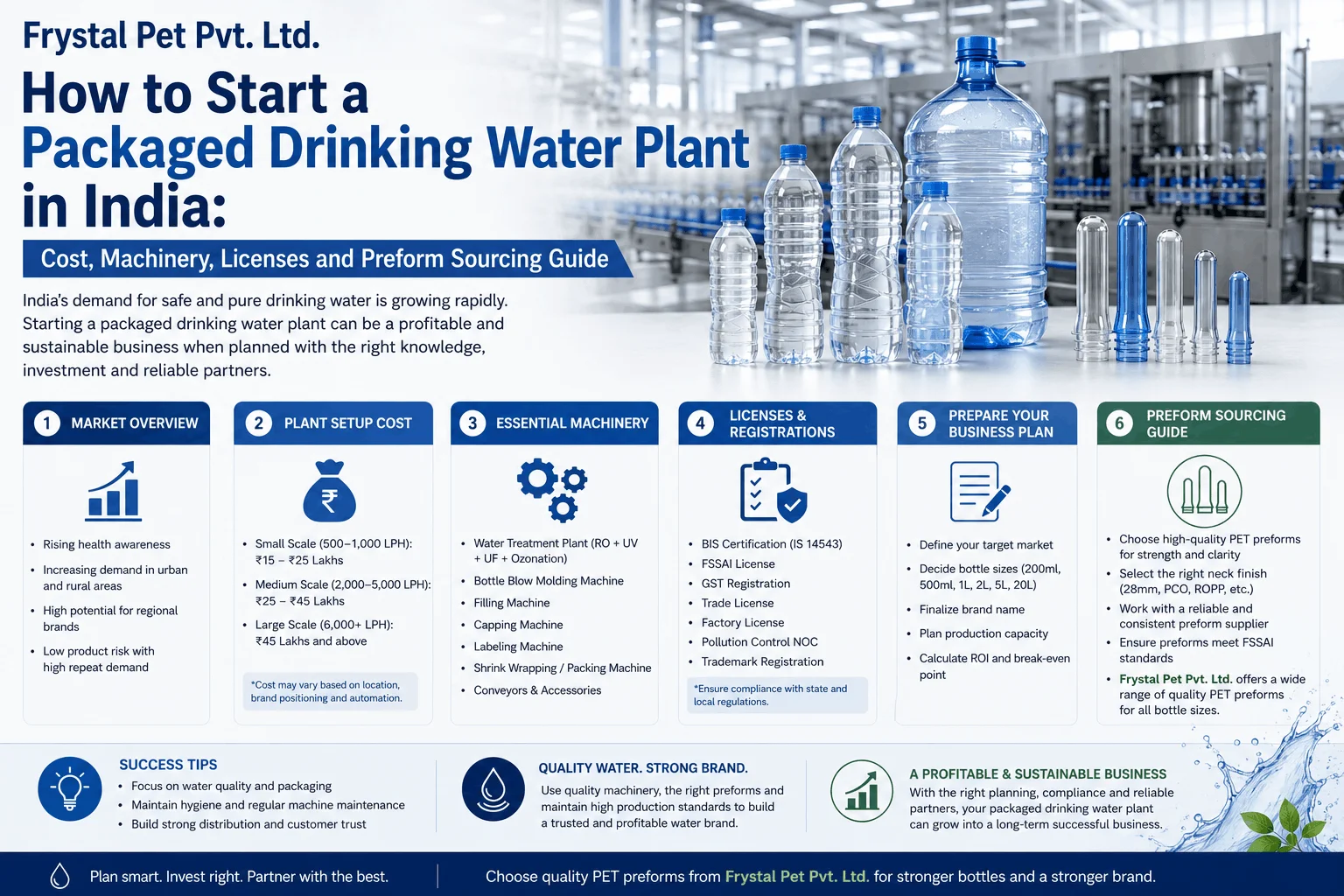
Starting a packaged drinking water plant in India requires a BIS license under IS 14543, a water treatment and bottle filling line, a suitable facility with power and water, the right licenses, and a reliable supply of packaging material. Setup investment varies widely with production capacity and level of automation. This guide walks through every step, including the part most guides skip: sourcing PET preforms, which become the single largest recurring material cost once your plant is running.
The cost figures and requirements below are indicative and vary by location, capacity, and current regulations. Always confirm licensing requirements with the relevant authorities and get equipment quotations for your specific plan before investing.
Demand for packaged drinking water in India continues to grow, driven by urbanization, travel and tourism, events, and rising concern about tap water quality. It is a repeat consumption product, which means steady recurring demand once you build distribution. Margins per bottle depend heavily on controlling your two biggest costs, which are packaging material and logistics. Plants that manage preform sourcing and neck and cap compatibility well tend to run more profitably than those chasing only the lowest sticker price.
Packaged drinking water in India must carry BIS certification under IS 14543. This is mandatory and involves facility inspection and water testing. Plan for this early because it affects your equipment and quality setup.
As a brand owner selling in plastic packaging, you also take on Extended Producer Responsibility obligations, including the recycled content requirements now applicable to PET packaging. Understanding these from day one avoids compliance surprises later. You can read our guide on the recycled content mandate and rPET preforms for detail.
The heart of the plant is water treatment, typically including reverse osmosis, UV treatment, ozonation, and storage tanks. The treatment design must meet BIS water quality parameters consistently.
Bottles are made on site by blowing PET preforms into bottles, then moving through a rinse, fill, and cap sequence. The line can range from semi automatic to fully automatic depending on your budget and target output.
You need adequate covered space for treatment, production, and storage, a reliable power connection, and trained operators. Layout planning affects both hygiene compliance and daily efficiency.
This is the step where new plants most often overspend or make costly errors. Getting it right protects your margin from day one.
Every bottle starts as a preform that you blow into shape. Because you buy preforms continuously, small decisions here multiply across millions of bottles. Choosing the right preform is more important to long term cost than almost any one time equipment choice.
The neck finish decides which caps and capping equipment you use, so it is a foundational decision, not an afterthought. Lightweight water neck standards like Alaska, CTC, and GME each pair with their own cap type. Our detailed Alaska vs CTC vs GME comparison explains which suits different lines.
Preform weight balances bottle strength against resin cost. Too light and bottles fail, too heavy and you waste money on every unit. See our preform weight guide to understand the tradeoff.
Closures must match your neck finish exactly. Labels and shrink film complete the pack. Budget these as ongoing consumables alongside preforms.
Total investment depends mainly on capacity and automation. As an indicative structure, your budget usually splits across these areas.
New owners frequently underestimate working capital. Since packaging material is bought continuously, keeping enough capital to fund steady preform supply is essential to avoid production stoppages.
New plant owners benefit from a preform supplier who guides specification choices rather than just taking orders. Frystal Pet Pvt Ltd supports new water plants with sample preforms to validate your line, guidance on neck finish and weight selection, and reliable bulk supply from two manufacturing units at Neemrana and Pithampur.
Getting the packaging foundation right from day one protects your margin and keeps your line running smoothly as you scale.
Starting a packaged drinking water plant in India is a structured process: secure your BIS and other licenses, set up compliant treatment and filling machinery, and lock in reliable packaging supply. The packaging decisions, especially preform neck finish and weight, shape your long term profitability more than most first time owners expect. Plan these early, validate with samples, and choose a consistent supplier. To start with the right preforms for your new water plant, request samples and a sourcing consultation from Frystal Pet Pvt Ltd.
The cost varies widely with capacity and automation level, spanning machinery, civil work, licenses, and working capital. Get equipment quotations for your target output and add sufficient working capital for recurring packaging material before finalizing a budget.
Yes. Packaged drinking water in India must be certified under BIS IS 14543. This is a mandatory requirement involving facility inspection and water testing.
Most water plants use lightweight short neck standards such as Alaska, CTC, or GME. The best choice depends on your capping equipment and cap supply. Comparing these neck finishes before setup helps you avoid costly changes later.
Profit per bottle depends heavily on controlling packaging and logistics costs and building steady distribution. Plants that manage preform sourcing and cap compatibility well generally run more profitably than those focused only on the lowest material price.
Frystal Pet Pvt Ltd manufactures water bottle preforms in multiple neck finishes and supports new plants with sampling, specification guidance, and reliable bulk supply. Request samples to test on your line before scaling up.

© 2026 Frystal Pet Pvt. Ltd. All Rights Reserved. Promoted by Webads India